
Evolution of a Holy Place
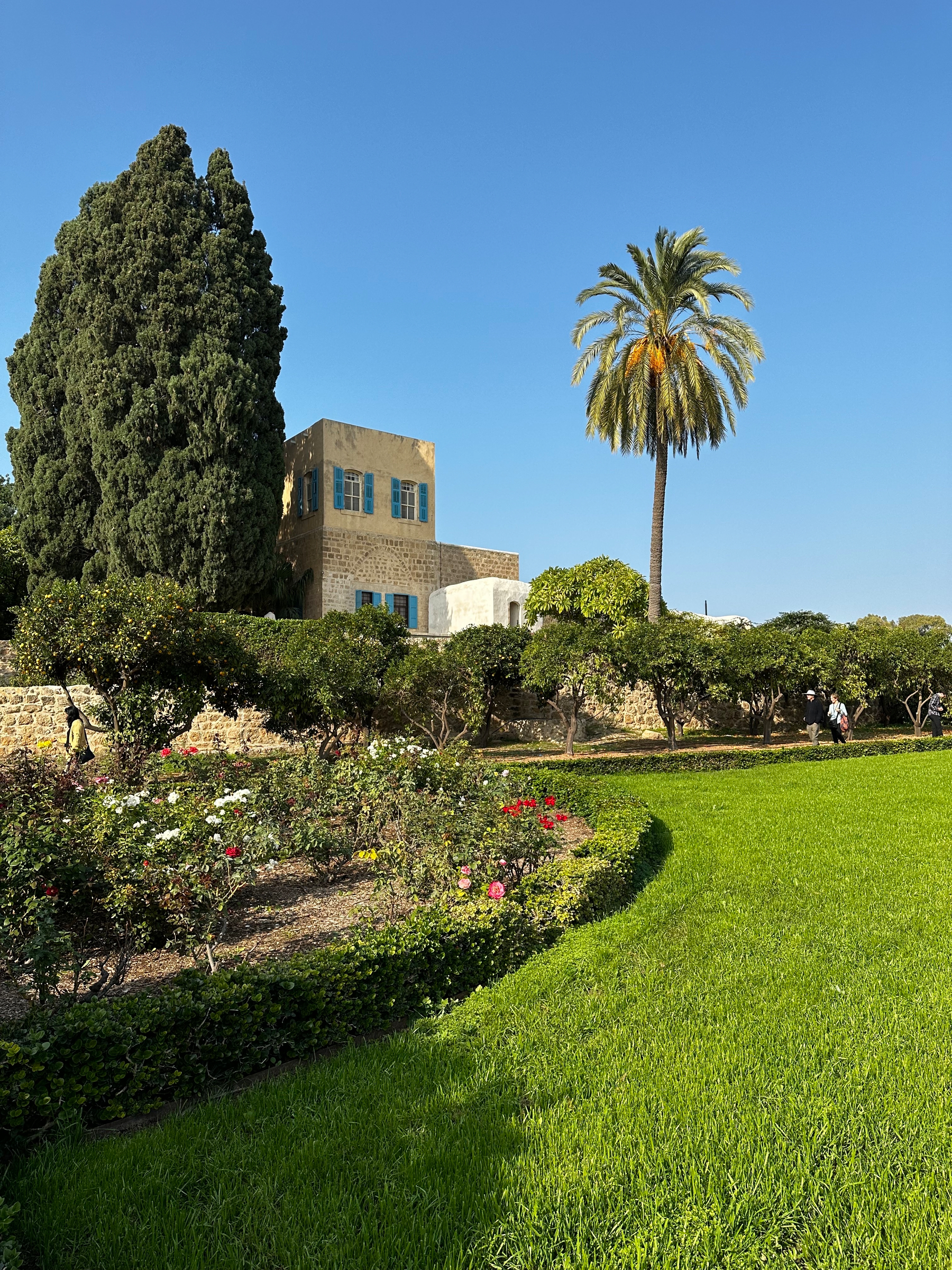
BAHÁ’Í WORLD CENTRE — New landscaping work in the vicinity of the Mansion of Mazra‘ih has created quiet paths, orchards, and vistas that invite prayer and reflection, allowing visitors to experience the tranquil spirit long associated with this Holy Place.
The work extends the comprehensive and ongoing ~conservation project~ begun in 2020 and reveals the natural beauty that greeted Bahá’u’lláh when He first left the prison-city of ‘Akká in 1877.
There’s such a beautiful tranquility that comes with walking through the gardens at The Bahá’í World Centre. What strikes me most of this new landscaping work is it’s unlike other gardens at the World Centre.
Gardens at The Bahá’í World Centre serve a variety of purposes such as: providing the Founders of The Bahá’í Faith an elevated commemoration that fits their Station, giving Pilgrims and other visitors to the Bahá’í World Centre time to transition into a prayerful mood, allowing for a meditative space to process deep thoughts. This new landscaping falls in my view falls under this third category yet it still manages to be unique.
The paths feel like organic avenues that weave their way through the landscape. While these paths technically lead to the Mansion of Mazra‘ih, their purpose is meant to be walked for as little of as long as one desires. The benches offer opportunities to rest and enjoy the landscape. These paths aren’t meant to be beautiful along the way to The Holy Place (like with other paths), they’re cohesive with the world.
From the Bahá’í World News Service video linked in the article:
One of the approaches that was taken in designing the garden was doing research to investigate what looked like when Bahá’u’lláh came here. But there was very little documentation. There were notes from pilgrim and there were a few photos, but nothing that gave the designers conclusive evidence of what the site looked like. So rather than try to duplicate what it looked like the intent was again to create that sense of openness.
The design used trees and play typical of this area and in that way, the visitors are able to feel familiar or at home in their fire which contributes to their spiritual experience.
It’s worth mentioning how The Universal House of Justice chose to pursue an emotional state rather than purely replace what was there during the time of Bahá’u’lláh. History is important but so is the present. I am overjoyed in the care and thoughtful nature of this undertaking to honor the history of the site by using native plants, while also adding another dimension to this spiritual place.